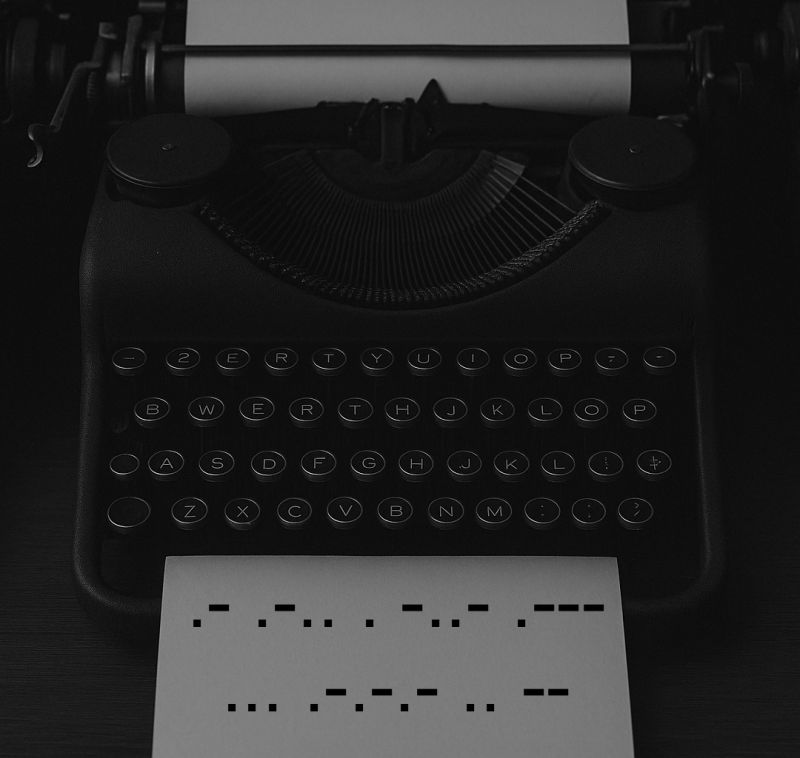
On Punctuation
Once a sign of confident prose, the emdash now makes me twitch. Not out of distaste, but curiosity. Was that dash placed by a writer — or an algorithm trying to sound like one? It’s strange to be suspicious of punctuation, but here we are.
At a recent event hosted by ACE.SG (Action Community for Entrepreneurship) and KPMG, two auditors (Owen and Wee Kee Yap) spoke about fraud in accounting. A simple but powerful observation stuck with me: people leave traces. Whether it’s unexpected fonts in a financial document or violations of Benford’s Law, anomalies are often where the story begins.
It’s not limited to accounting, you see it in language too: the way people speak one language carries patterns from another. Mandarin speakers might say “close the light” instead of “turn off the light” – a direct grammatical mapping. Those who learned typing in the early days may still use a double space after a period. These aren’t mistakes; they’re linguistic fingerprints which quietly tell you things about the speaker.
In tech, we see similar tells. The humble hosts file /etc/hosts on Unix, but also present in Windows under System32\drivers\etc\hosts is a good example. It reflects the inheritance of a shared TCP/IP architecture, where even modern systems carry traces of the history that shaped them. The directory structure and function persist not because they must, but because history leaves patterns that are hard to scrub clean.
For those with AuDHD, these tells aren’t background noise, they’re our signal. Pattern recognition becomes instinctive. You notice when something doesn’t quite fit, or when something fits a little too neatly.
Which brings me back to the emdash. LLM-generated content heavily leans on emdashes — a stylistic choice not common to most casual writers. Every time I see an emdash on a LinkedIn post or email, I catch myself wondering if this by the person, or by a machine.
AI-augmented content is fast, fluent, and useful. Using AI as a Copilot to improve and iterate writing improves inclusivity for people in a way never possible before. For my own work at Microsoft, the annual employee survey’s free form comment section was always anonymous, but writing patterns surface – leaving some worried their identity could be disclosed unintentionally. Our most recent survey now uses the Copilot AI to summarise text and capture intent – improving privacy and safety.
However if content trends toward statistically average outputs, we risk smoothing out the quirks that signal personality and originality. Pattern is identity. Lose the oddities, and we risk losing the author behind the text.
Perhaps the answer isn’t to distrust the emdash, but to write with such intent that no machine can replicate your fingerprint. Patterns may give us away — but our quirks are what make us worth reading.
